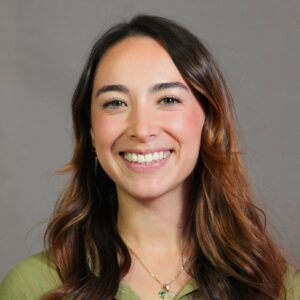
Juanita Mora is a predoctoral researcher at the Universidad de Alcalá, where she works within the Public Health and Epidemiology research group as part of the OBCT European Project. Her research focuses on health inequities and physical activity among children. Using co-creation methodologies and quantitative approaches, she takes a multi-method approach to support the implementation of equitable and effective public health policies. She is especially interested in translating evidence into practical tools that can be used by local governments and frontline practitioners to strengthen health promotion efforts.
How would you describe your program of research and its significance?
My program of research focuses on social inequalities in health. Health is not equally distributed across society. Individuals and communities with fewer resources and less structural power often experience a disproportionate burden of disease, shaped by intersecting social and environmental determinants. The significance of this research lies in its commitment to identifying, understanding, and addressing these inequities. By highlighting where and why inequalities occur, and by working alongside communities and policymakers, the goal is to contribute to public health approaches that are not only effective, but also equitable.
How do you envision your research impacting public health policies or practices? (What recommendations do you have for others hoping to translate their research into policy or practice?)
Through our work with co-creation with local stakeholders, we aim to develop a practical guide that is meaningful and usable for local governments. Rather than introducing new interventions, the goal is to help stakeholders make effective use of existing national strategies and policies by providing a structured guide to support implementation. Including, strengthening connections between stakeholders, understanding the community’s needs, and raising awareness of existing resources to make interventions more sustainable and impactful. Translating research into practice requires engaging stakeholders early, listening to their priorities, and designing outputs that are directly relevant to their daily work.
What is the most important advice you received as an early career researcher? (And why do you say that?)
While often feeling like an individual journey, a PhD is truly a collective effort. As an international student, it can sometimes feel isolating or overwhelming, and the scope of the work may seem larger than what one person can manage alone. However, science is inherently collaborative. Supervisors, colleagues, community partners, and peers all contribute perspectives, support, and knowledge that shape our research process. Understanding that I did not have to do everything alone helped me embrace the experience. It reinforced the idea that research is not just about producing knowledge, but about learning together and contributing to a shared purpose.
Connect with Juanita on LinkedIn.
