
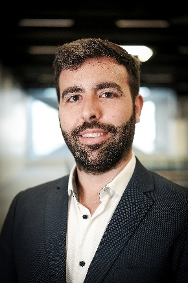
Ruben is a pharmacist from Portugal currently engaging in a PhD in the Faculty of Pharmacy in Lisbon in the area of physical activity promotion and working for the International Pharmaceutical Federation (FIP) in the area of pharmacy practice. He is interested in public health, physical activity and behaviour change, health-related non-governmental organizations, and soft-skills. Through his research, he has been working with different stakeholders in the promotion of physical activity through pharmacists. He also has worked in the past in community pharmacy and different projects related to health promotion.
How do you explain your current research/job to friends and family?
I’m a pharmacist committed to helping people achieve better health outcomes by adopting healthier behaviours. Among the many factors that influence our wellbeing, I’m particularly interested in the role physical activity plays in improving quality of life. As accessible healthcare professionals, pharmacists are uniquely positioned to support lasting, positive change within healthcare systems.
What inspired you to pursue a career in research? What drives you to continue in this path?
I am a pharmacist by background, but having been passionate about sports since childhood, I decided to pursue a second master’s degree in Physical Exercise and Health. Although few pharmacists take this path, I had the opportunity to learn a great deal from colleagues in fields such as sports science. This experience made me realize that I wanted to merge both areas, and I found physical activity promotion to be a much-needed field where pharmacy and exercise science can come together to make a real impact. Creating a world where everyone makes better health choices is what drives me to continue on this path.
What is a project you’re working on right now that you’re excited about?
Our most recent research project evaluated whether community pharmacists could promote physical activity among people living with type 2 diabetes by delivering brief counselling interventions over six months. Participants received a wearable wrist-worn accelerometer to monitor daily step count and completed self-reported assessments of physical activity and sedentary time. The pharmacists in the intervention group were trained and supported with standardized materials to encourage active lifestyles, while the control group received basic information. Overall, the study aimed to determine whether a pharmacy-based health management service could contribute to sustained behaviour change and increased physical activity levels in routine practice.
What is a paper you recently published? What excited you about the question you answered?
One of the most exciting papers we published was “Pharmacists’ involvement in physical activity promotion in community pharmacy: a systematic review”. This systematic review is exciting because it illuminates a largely untapped resource — community pharmacists — in the promotion of physical activity (PA). By synthesising 29 studies the paper not only identifies existing interventions but also highlights major gaps: most rely on self-reported PA data, and only a third had low risk of bias. In doing so, the review opens a clear agenda for integrating exercise science with pharmacy practice.
Given unlimited funding, what would your dream research project be?
With unlimited funding, my dream research project would focus on transforming community pharmacies into integrated health hubs for lifestyle behaviour change. I would develop and evaluate a multi-country intervention where pharmacists are trained and equipped to deliver personalized physical activity and lifestyle counselling, supported by digital health tools and wearables. The project would combine behavioural science and real-time activity tracking to assess long-term impacts on chronic disease management, healthcare costs, and patient wellbeing.
Interested in connecting with Ruben?
ORCID: https://orcid.org/0000-0002-8518-3277
LinkedIn: https://www.linkedin.com/in/rubenviegas/
